He Is Risen!
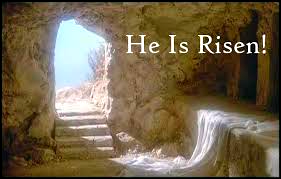
The Gospels are spiritual truths that anyone could understand. They are about something that happened.
Acts 10:37-41 37you yourselves know the thing which took place throughout all Judea, starting from Galilee, after the baptism which John proclaimed. 38You know of Jesus of Nazareth, how God anointed Him with the Holy Spirit and with power, and how He went about doing good and healing all who were oppressed by the devil, for God was with Him. 39 We are witnesses of all the things He did both in the land of the Jews and in Jerusalem. They also put Him to death by hanging Him on a cross. 40 God raised Him up on the third day and granted that He become visible, 41 not to all the people, but to witnesses who were chosen beforehand by God, that is, to us who ate and drank with Him after He arose from the dead.
Peter speaks about what happened: “you yourselves know the thing which took place throughout all Judea, starting from Galilee, after the baptism which John proclaimed.” You could imagine what people were saying, “Yes, we remember.” Peter goes on: “You know of Jesus of Nazareth, how God anointed Him with the Holy Spirit and with power.” It’s about this very particular man Jesus, some things that he did, and finally something that happened to him: “They also put Him to death by hanging Him on a cross. 40 God raised Him up on the third day.” There is what happened., There is the event upon which all of Christianity rests.
Then this: “God granted that He become visible, not to all the people, but to witnesses who were chosen beforehand by God, that is, to us who ate and drank with Him after He arose from the dead.”
It’s clear that Paul is not talking about myths or legends. He’s making it known that he ate and drank with a dead man who had come back to life.
Everything changed, everything they believed about life and death had to be reevaluated. In John’s account of what happened; The first thing you notice is just how much running is going on. Mary Magdalene runs; Peter runs; John runs. John runs so fast that he outpaces Peter. We run when something urgent has happened, when we’ve got somewhere to go, something to say, someone to tell.
John 20:1-8 Now on the first day of the week Mary Magdalene came early to the tomb, while it was still dark, and saw the stone already taken away from the tomb. 2 So she ran and came to Simon Peter and to the other disciple whom Jesus loved, and said to them, “They have taken away the Lord out of the tomb, and we do not know where they have laid Him.” 3 So Peter and the other disciple went forth, and they were going to the tomb. 4 The two were running together; and the other disciple ran ahead faster than Peter and came to the tomb first; 5 and stooping and looking in, he saw the linen wrappings lying there; but he did not go in. 6 And so Simon Peter also came, following him, and entered the tomb; and he saw the linen wrappings lying there, 7 and the face-cloth which had been on His head, not lying with the linen wrappings, but rolled up in a place by itself. 8 So the other disciple who had first come to the tomb then also entered, and he saw and believed.
Mary Magdalene came to the tomb early in the morning while it was still dark. She was heartbroken, probably in tears, and she had come like anyone would come to a tomb: to pray, to meditate, to mourn. But then she noticed that the heavy stone was rolled back, and this got her attention. Something unexpected had obviously occurred. Thinking that the body of Jesus had been stolen, “she ran” with the urgent news to the disciples. Then, upon hearing this, Peter and John—the head of the Apostles and the Apostle whom Jesus specially loved “both ran.” Something had happened and they had to find out what it was. It says, “the younger man outran the older man and got to the tomb first.”
The two runners bent in to look into the tomb. They noticed the burial cloths that had wrapped the body of Jesus, and something struck them as very odd. First, why would thieves have bothered unwrapping the body? Wouldn’t they have just carried it away? But second, even if they had stripped them off, would they be lying neatly in place, with the cloth that had covered his head “rolled up in a separate place.” Why would thieves do that? When John entered the tomb, we are told that “he saw and believed”. He realized it wasn’t that someone had broken into the tomb; rather, someone had broken out of it. Because of this, everything changed, all expectations were reversed; everything they believed about life and death had to be reevaluated.
In the Gospel of Mark, you find out about the women, upon hearing from the angel that the Lord had been raised, Mark 16:8 8 They went out and fled from the tomb, for trembling and astonishment had gripped them; and they said nothing to anyone, for they were afraid. Most cemeteries are places of peace; this one gave rise to holy terror. Until we understand why, we haven’t understood Easter. Until we share some of that same fear, we are in danger of downplaying an important event in human history.
God’s love is more powerful than death because Jesus found his way out of his grave. Let us all run out to meet everyone we can to share the news!
The Gospels present spiritual truths that are accessible to everyone. They recount events that truly happened, revealing the foundation of Christian faith.